At the forefront: Humanitarian diplomacy
With Jonathan Ziehli, Director of diplomacy at Mercy Ships
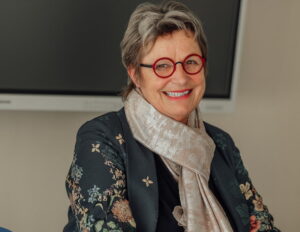
A member of Mercy Ships Switzerland for ten years, Jonathan Ziehli reflects on his journey – from his first humanitarian experience to the challenges he faces during the negotiations that allow the mission to happen.
The merging of two spheres
His first humanitarian experience left a lasting impression: while visiting refugee camps, prisons, and orphanages in South Africa, Thailand, and Cambodia, Jonathan Ziehli was brought into close contact with “life on the ground”. His passion for history, geography, and current affairs led him to pursue a Bachelor’s degree in International Relations in Geneva, followed by a Master’s in Political Science.
His first internship, at the United Nations, immersed him in the heart of global political affairs, while his second, at the Swiss Embassy in Qatar, introduced him to geopolitics as well as bilateral and multilateral diplomacy before he secured his first position in the NGO sector at Mercy Ships Switzerland as a project coordinator.
“It was there that I found the merging of my two worlds: humanitarian work and diplomacy.”
Often travelling with delegations assessing conditions on the ground ahead of the ship’s arrival, he connects Swiss partners providing direct support to field operations. Within Mercy Ships, Switzerland plays a central role as a “programmatic bridge with Africa”. As a representative of Mercy Ships to governments, he became Director of Diplomacy in 2025.
“Together with my colleagues of Africa Services, we are preparing for the arrival of the vessels with the governments, both for the signing of agreements and for their implementation.”
"We are preparing for the arrival of the vessels with the governments, both for the signing of agreements and for their implementation." - Jonathan Ziehli
The Swiss Programmes Team
While the Swiss office’s mandate for fundraising and recruitment is well known, its support for programmes—i.e. field operations—is less so. It is structured around two main areas: connecting
Swiss partners or projects with Mercy Ships’ on-the ground activities, and supporting projects through manpower, for example in infrastructure renovation work. Multilingual and closely connected to numerous international organisations, Switzerland brings together expertise and a strategic location that are essential to the mission, for instance during the World Health Assembly (WHA) in Geneva.
Inside Humanitarian Diplomacy
The role of diplomacy within Mercy Ships is essential, as the mission begins long before the first patient steps onto the ship’s gangway.
“We begin discussions with governments two to three years in advance. Our mission requires a great deal: importing containers, working with the various ministries, selecting patients across an entire country, securing medical staff immunity, booking a berth in port… Dozens of issues must be negotiated upstream with the governments that invite us into their country.”
The mission begins long before the first patient steps onto the ship's gangway
These negotiations result in two types of agreements, without which the mission cannot take place: the protocol agreement and the headquarters agreement. Orchestrated with a wide range of stakeholders—from embassies to the presidency, via various ministries— the negotiation process requires extensive anticipation, and even minor delays can create significant logistical challenges. Mercy Ships currently holds agreements with seven countries and is in negotiations with four others.
“It is important to understand that the countries with which we have agreements are also those with which we continue negotiations: to renew agreements, or to amend them following the introduction of new laws, and so on. We want to build long-term relationships with them.”
The first link in the chain
Once the diplomatic negotiations have been completed, the Country Engagement Teams (CET) take over to turn agreements into concrete reality: liaising with customs, setting up the CET team on site, selecting patients, and managing logistics for the construction of the HOPE Centre (similar to a hotel, with its 300 beds designed to accommodate, feed, and house patients before and after their surgery). All of this is carried out twice over—once for each ship’s destination.
Iron fist in a velvet glove
A matter of balance, diplomacy requires both tact and nuance, as well as courage and firmness to secure what is needed.
“If you lean too far one way, the mission will fail.”
It is a grey area that can be uncomfortable, as the organisation’s agenda and logistics must be aligned with those of the host nation—a fragilebalance, sometimes disrupted by challenges such as geopolitical shifts, natural disasters, or epidemics.
A life of contrasts
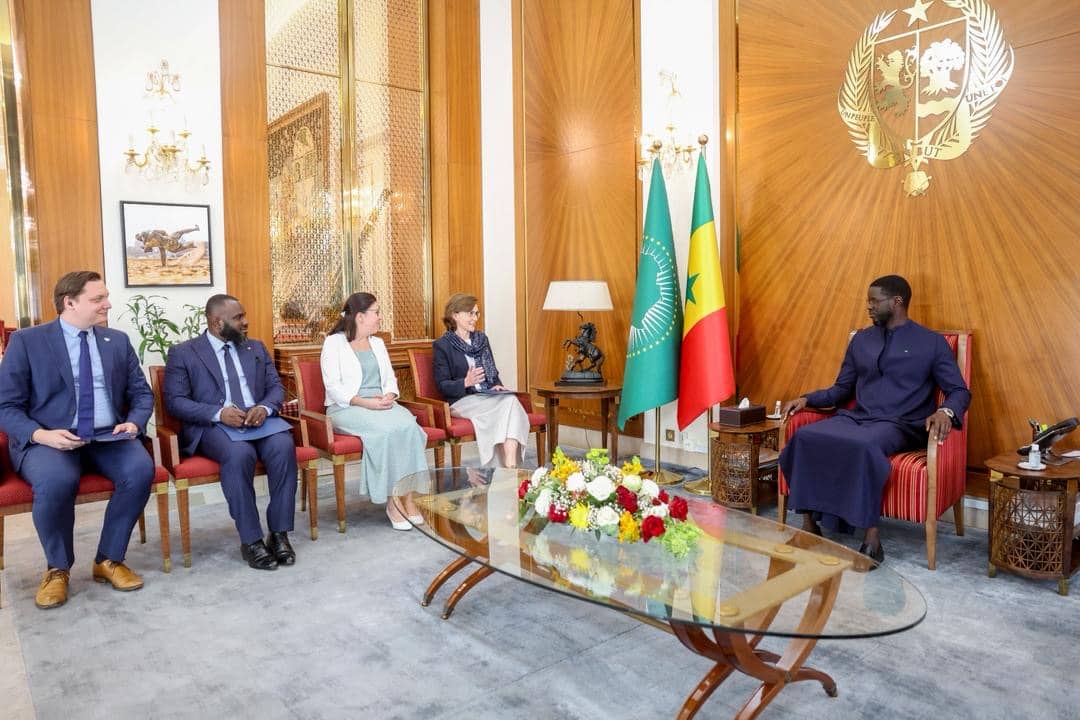
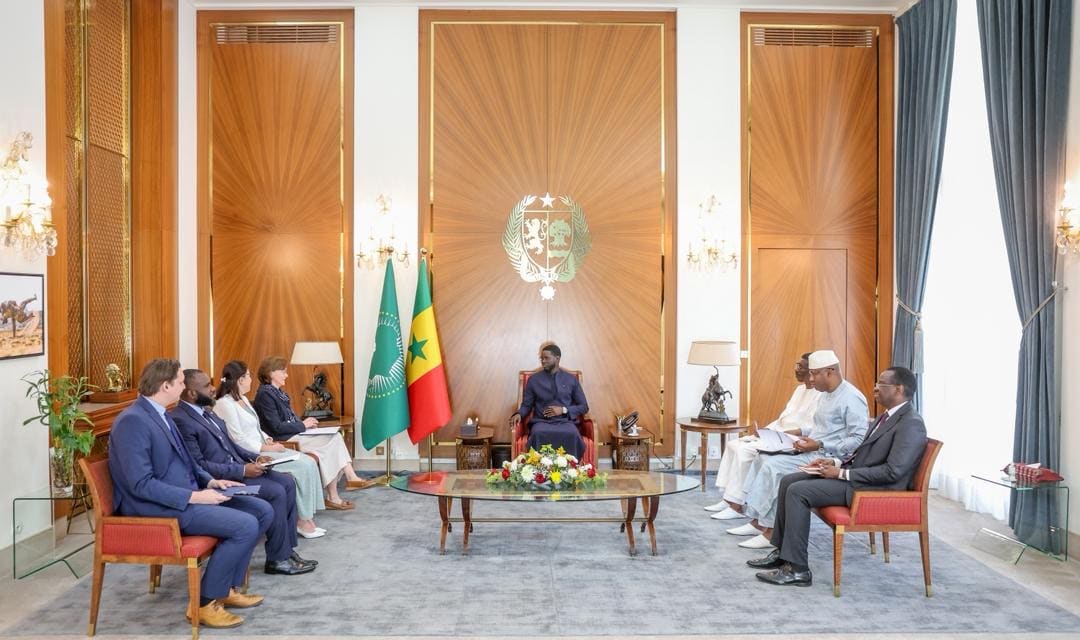
Jonathan Ziehli highlights the richness of the encounters and the diversity of contexts he experiences, from a presidential visit to time spent alongside a patient whose face has been disfigured by a tumour.
“I had this dream at 19 to travel and to combine my two passions. And I’m fortunate to do both today: practising “diplomacy” for a humanitarian cause and in support of an NGO’s mission.”


The steps before our missions begin
Diplomacy
Advanced team
Patient selection
Hospital ship arrival
Surgeries
- 20 July 2026
Derniers articles publiés

Building Autonomy Through Training
In Guinea, Pierrette Chenevard trained medical educators with Mercy Ships, demonstrating how sharing knowledge and skills helps strengthen healthcare systems for the long term.

Humanitarian Relief in Madagascar after Cyclone Gezani
In the wake of Cyclone Gezani, Mercy Ships has joined national disaster response efforts in Toamasina to support affected communities with utgently needed relief supplies.
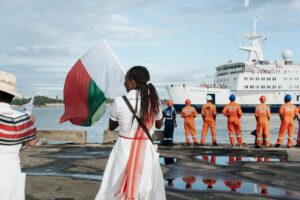
Update on the Situation in Madagascar, One Week After Cyclone Gezani
On February 10, Tropical Cyclone Gezani struck Madagascar, severely impacting the port city of Tamatave (Toamasina). As a long-standing partner in Madagascar, we recognize the profound impact this has had on families and communities across the region.
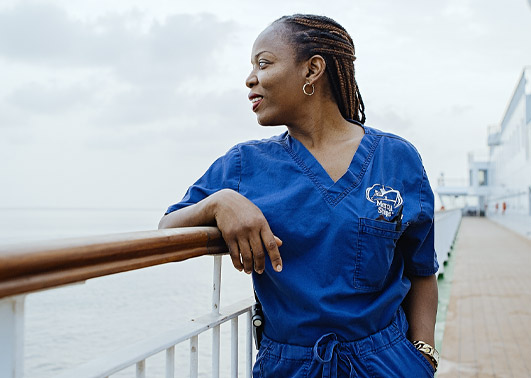
Physiotherapists from Sierra Leone aboard the Global Mercy
Through its programmes of medical capacity building,
Mercy Ships contributes to the development of the expertise of active professionals committed to improving surgical care in Sierra Leone.
Tags
Lire d'autres articles

Dr. Justina Seyi-Olajide: A Pioneer Aboard the Global Mercy
Dr. Justina Seyi-Olajide, a brilliant pediatric surgeon from Nigeria, made history aboard the Global Mercy in Sierra Leone, becoming the first female African pediatric surgeon to serve as a volunteer with Mercy Ships.
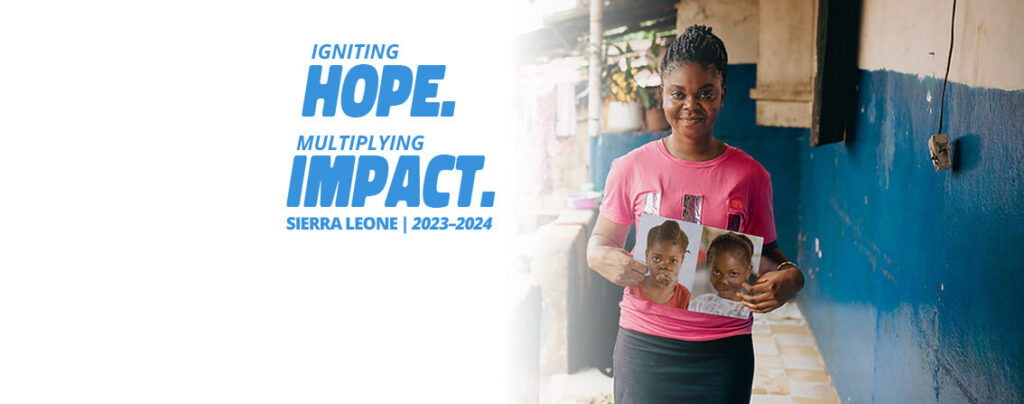
Sierra Leone: Igniting Hope, Multiplying Impact
Humanitarian field service in Sierra Leone The next chapter for Mercy Ships and the hospital ship, the Global Mercy ! Over the course of the field service in Sierra Leone,
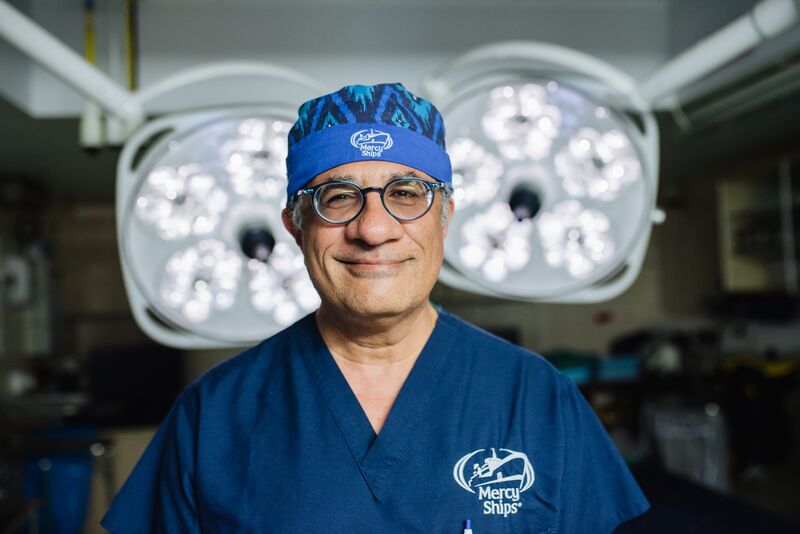
Global Surgery must evolve : Mercy Ships shows the way
Discover the vision of Dr. Sherif Emil, International Medical Director at Mercy Ships. From engineering to pediatric surgery, he shares his journey and offers his vision for a more sustainable, inclusive, and equitable global surgery, built on collaboration.