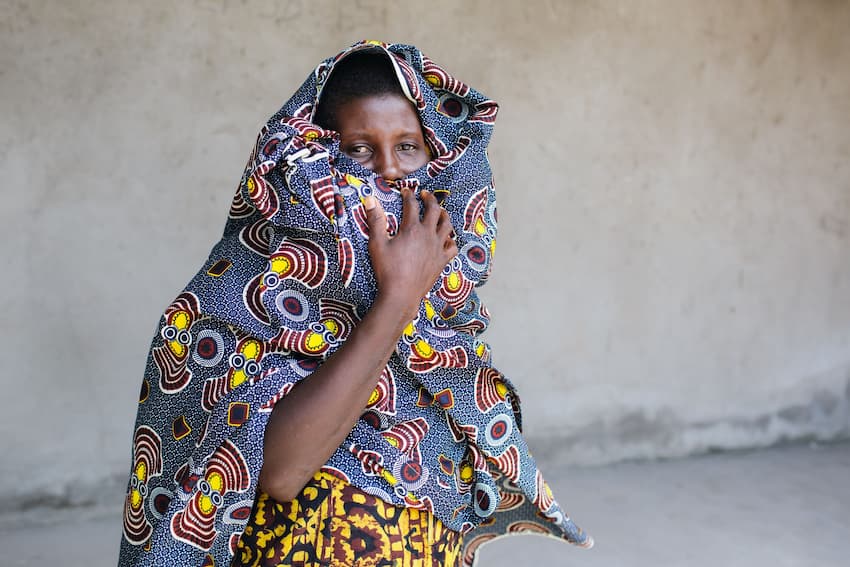
Beyond the name
they were given
Story of Fenitra, Rolland and Rody
In every village in Madagascar, some families are known for their skills, others for the fruits or vegetables they grow. For years, Haja’s family was known for something entirely different: the deformed legs of three of his children.
A hurtful label
“Those are Haja’s children… the ones with bowed legs!” Haja, a farmer, hears this phrase too often. It reduces his family to a single physical condition—a label that cuts deeply. As one, then two, then three of his children develop bowed legs, worry grows and the future seems increasingly uncertain. Berthine, the mother, lives with constant anxiety. “My mind was always full,” she says. “I kept wondering what their future would be.”
As the years pass, the condition worsens. Fenitra, 15, and Rolland, 8, struggle to walk long distances. Their legs curve more and more, their feet turning inward, making every step difficult. To get to school, they walk two hours each way, fighting to keep their balance and sometimes falling along the way. “People make fun of us, but we don’t respond—we just keep going,” they say. Little Rody, 6, seems to be following the same path, as his legs also begin to deform.


Africa Mercy in sight!
Berthine fears her children may never finish school, find work, or escape the mocking voices around them. To make matters worse, in their community, bowed legs are sometimes seen as a curse, adding another layer of burden to their suffering.
Hope returns in 2025 when the Africa Mercy arrives in Madagascar and surgery is scheduled for the three children. The diagnosis is clear: their condition is caused by untreated rickets, a disease linked to malnutrition that weakens bones during childhood. One by one, Fenitra, Rolland, and Rody undergo complex orthopedic surgery aboard the hospital ship.


Step by step, together
Rehabilitation is long and demanding. With their legs immobilized in casts, learning to walk again brings pain and sometimes tears. Every day, they repeat the same exercises over and over again. “They supported each other,” recalls Maddy, a volunteer physiotherapist. “When one achieved a milestone, the others believed they could too. We saw them laugh, joke, and encourage each other. They went through every stage together.”
Gradually, pain gives way to new possibilities. And finally comes the day when their efforts pay off. Back in the village, the family is welcomed with surprise and emotion. Haja will never forget that moment: “We danced with joy, we celebrated until dawn!”
For Berthine, the relief is overwhelming. “Before, I worried day and night,” she says. “Now I feel light, and my mind is at peace.”
Today, Fenitra, Rolland, and Rody walk without difficulty. The family is still known in the village, but the story told about them has changed: it now speaks of transformed lives and renewed hope.


Mercy Ships brings hope and healing to those in need, just like Fenitra, Rolland and Rody. You can also support and help change lives, and even whole families, by donating.
Discover more patient stories

Story of Fenitra, Rolland and Rody
For years, Haja’s family was known for this reason: the bowed legs of three of his children. Will there be an end to this pain, both physical and emotional?
Story of Ruth
Ruth was born with Blount’s disease, a condition that causes the legs to progressively bend inward. Would Mercy Ships be her last hope?

Story of Theogette
It all started with a toothache. Badly treated, it evolved into a benign tumor that relentlessly grew, causing great suffering and isolation. Until eventually, her nephew introduced her to Mercy Ships…
