Global Surgery must evolve : Mercy Ships shows the way

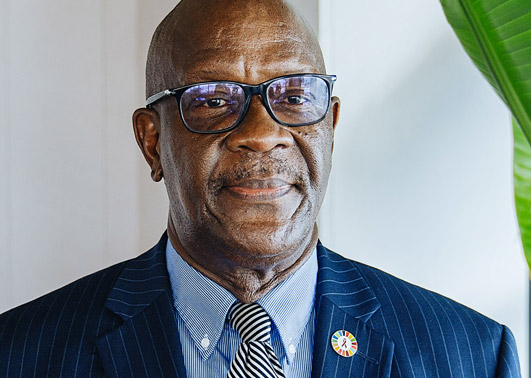
Discover the vision of Dr. Sherif Emil, International Medical Director at Mercy Ships. From engineering to pediatric surgery, he shares his journey and offers his vision for a more sustainable, inclusive, and equitable global surgery, built on collaboration.

My journey in medicine has not been conventional. Growing up in a family of doctors, I initially sought my own path. I began my career in engineering, but I quickly realized that something essential was missing: the human element. I returned to medicine, to what I now consider my calling: to serve, connect with people, and help transform children’s lives through surgery.

Driven by this desire for connection, I trained in surgery, then in pediatric surgery, dedicating myself to global healthcare and eventually joining Mercy Ships. My commitment to underserved communities was inspired by my parents’ work as doctors in rural areas of Nigeria. It fueled my desire to devote my life to providing surgical care to those who need it most.

For greater equity, local leadership, and collaboration

Throughout my career, I have operated in state-of-the-art hospitals as well as in some of the world’s most underserved environments. Global surgery is a diverse and multifaceted initiative. Short-term missions and humanitarian work contribute to this effort. But moving forward, the success of global surgery must be rooted in equity, local leadership, and sustainable collaboration.

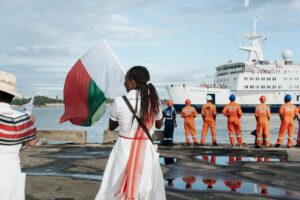
Mercy Ships operates the world’s largest civilian hospital ships, bringing surgical care to people who would otherwise have no access. But our work goes beyond surgeries; it is about genuine partnerships—working alongside African ministries of health, governments, surgeons, nurses, and hospitals to establish sustainable healthcare systems.

“Most of our volunteer surgeons have traditionally come from high-income countries, and I wanted to change that.” - Dr Shérif Emil

During my years at Mercy Ships, first as a volunteer and later as a pediatric surgery consultant, I witnessed the difference that this second approach can make. I had the privilege of being trained and of training others. I worked alongside recognized African surgical leaders in low- and middle-income countries who are reshaping their own healthcare systems—not just for today, but for future generations.

Most of our volunteer surgeons have traditionally come from high-income countries, and I wanted to change that. Before becoming International Medical Director, I submitted a proposal to Mercy Ships’ Programs Leadership to fund pediatric surgeons from low- and middle-income countries to recruit volunteer surgeons locally and diversify our surgical workforce. The proposal was well received, and we are in the process of implementing it.

Dr. Justina Seyi-Olajide, an Extraordinary Surgeon

This model was recently exemplified aboard the Global Mercy when we welcomed Dr. Justina Seyi-Olajide, the first African pediatric surgeon to volunteer with Mercy Ships. A prominent pediatric surgeon recognized in her field in Nigeria, her presence was not symbolic—it was essential. She embodies a shift in how global health should be approached: not as ‘we are helping Africa,’ but as ‘we serve and learn together.’

Dr. Seyi-Olajide’s expertise, cultural knowledge, and leadership align perfectly with the needs of the global surgical community. Her involvement demonstrates to young African surgeons that they are not just there to receive knowledge, but also to share it, pass it on, and help shape the future of care in their own countries and beyond.

A Talented Generation Ready to Step Up

The need for pediatric surgery in Africa is immense. But the potential is just as great. We are seeing a new generation of talented, passionate African surgeons ready to take the lead. Our role at Mercy Ships is to support and listen to our African colleagues, to collaborate with them rather than overshadow them. We invest in training programs, support local systems, and ensure that care continues long after our ships have departed.

In global surgery, good intentions are not enough. We must avoid the pitfalls of past models, where aid could unintentionally cause harm, overlook local expertise, or create dependency. There are well-documented critiques of humanitarian medicine and the inequalities that remain all too common. But we can do better. We can address inequalities in the healthcare system, and we are living proof that it is possible.

“Our role at Mercy Ships is to support and listen to our African colleagues, to collaborate with them rather than overshadow them. ” - Dr Shérif Emil

At Mercy Ships, we are building a different, sustainable model. After six months in my new role as International Medical Director, I remain deeply committed to advancing this vision—one that places African voices at the center, prioritizes teaching, and delivers safe, life-changing surgical care to children and families who need it most. We hope this will help recruit more surgeons across Africa.

The future of global surgery must be collaborative, inclusive, and equitable. I believe that the NGO Mercy Ships can help show the way—not alone, but hand in hand with the people we serve.

Derniers articles publiés

Gary Parker: A Life Dedicated to Volunteer work

Dr. Gary Parker, a surgeon with 40 years of service aboard, was honored with the prestigious Humanitarian Award from the American College of Oral and Maxillofacial Surgeons (ACOMS) for his exceptional contribution to global health. This esteemed distinction was awarded for the thousands of transformative free surgeries he has performed aboard the Global Mercy.

Tags

Lire d'autres articles

Votre don offre une nouvelle vie à nos bénéficiaires.